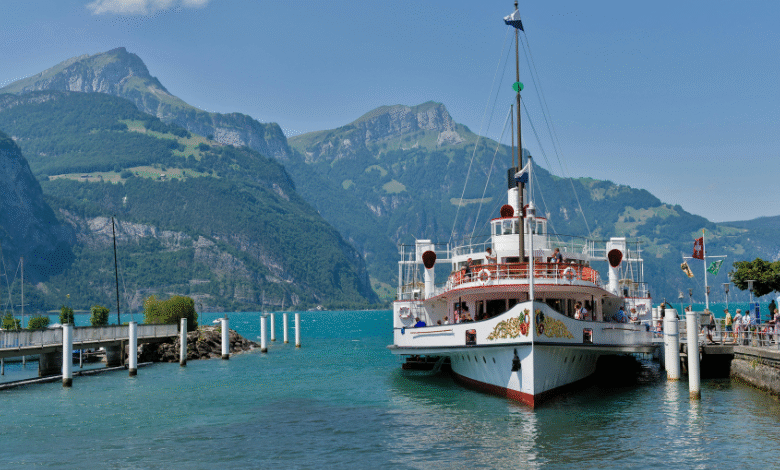
When we picture a steamboat, we often see the grand image first. The towering twin smokestacks belching black coal smoke. The massive, red paddlewheel churning the water into a white froth at the stern. The elegant decks filled with passengers and the sound of a calliope. It’s a romantic vision, a symbol of a bygone American era. But if you look up, high atop the boat, you’ll see a small, glass-walled room. That is the pilot house. And inside that room was the most important person on the vessel, the true brains and nerve center of the entire operation: the steamboat pilot.
He wasn’t the captain. In fact, on a steamboat, the pilot held a power that even the captain had to respect. While the captain managed the business, the crew, and the passengers, the pilot was the undisputed master of the boat’s movement. His word was law when it came to navigation. A single command from him—”Starboard a tad!” or “Hard to larboard!”—meant the difference between a safe journey and a catastrophic wreck on a hidden sandbar or a sunken tree. This wasn’t just a job; it was a position earned through years of grueling apprenticeship, requiring a photographic memory, razor-sharp instincts, and a kind of sixth sense for the water flowing beneath the hull. I’ve always been fascinated by this blend of intense skill and raw, untamable nature. It’s a profession that simply doesn’t exist in the same way today, and understanding it helps us understand the very spirit of exploration and commerce that built a nation.
What Exactly Did a Steamboat Pilot Do?
Let’s clear up a common misconception right away. The steamboat pilot was not the captain. The hierarchy on a riverboat was unique. The captain owned (or operated) the boat and was responsible for its commercial success. He was the CEO. The pilot, however, was the chief technology officer and the lead operator rolled into one. His sole responsibility was the safe navigation of the vessel from one port to another.
Think of the Mississippi River in the 19th century not as a modern, dredged, and controlled waterway, but as a wild, living, and constantly changing monster. It was a sprawling, muddy ribbon of water that could change its course after a single storm. What was a deep, safe channel one season could be a mile-wide shoal of sand the next. The river was littered with what rivermen called “obstructions”: sunken logs known as “snags,” hidden sandbars that could ground a boat for weeks, and treacherous, shifting currents.
The pilot’s job was to know all of this, intuitively and instantly. He had to memorize every bend, every bluff, every plantation landing, every single tree on the riverbank for over a thousand miles. He had to know how the river looked at high water and at low water. He had to understand what a slight change in the color of the water meant, or how a certain ripple on the surface indicated a hidden danger below. While the captain slept, the pilot was often at his wheel, guiding the boat through pitch-black nights or thick, soupy fog. His decisions were final because there was no time for a committee meeting when you were seconds away from plowing into a “sawyer,” a waterlogged tree bobbing dangerously just below the surface. The lives of everyone on board, and the fortune represented by the boat and its cargo, rested squarely on his shoulders.
Read Also: The Divergent Cast: Where Are They Now?
The Ultimate Skill: “Reading the River”
This is the phrase you’ll hear most often when learning about steamboat pilots. “Reading the river.” It sounds poetic, and it is, but it was also a deadly serious, practical science. It was the core skill that separated a novice “cub” pilot from a respected master. Reading the river meant interpreting the surface of the water to understand exactly what was happening underneath, without any modern sonar or depth finders.
Understanding the River’s Constant Changes
The Mississippi was not a static highway. It was a dynamic, sediment-laden river that was always building up and tearing down its own bed. A pilot couldn’t rely on a map from last year. His knowledge had to be current, literally. He learned to read the water’s surface like a book.
For example, a smooth, glossy patch on an otherwise rippled surface often indicated a shallow sandbar just beneath the water. The water flowing over the bar had less resistance, so it smoothed out. A little “pucker” or dimple on the surface might be the top of a drowned tree, a snag, waiting to punch a hole in the boat’s hull. A certain oily-looking swirl in the current could mark a deep, safe channel—the main “thread” of the river’s flow.
Pilots also used the riverbanks as crucial guides. They memorized thousands of landmarks. A particular dead tree, a unique rock formation, the smokestack of a riverside factory—all of these were like signposts on a terrestrial road. They would line up a specific tree with a notch in a distant hill to know precisely where to turn the boat to stay in the channel. This required an incredible memory. Imagine having to memorize every single turn, exit, and landmark on a road trip from New York to Florida, and then being able to drive it perfectly at night, with no headlights, in a vehicle that could explode if you made one wrong turn. That was the level of mental fortitude required.
The Language of the River: Whistles and Signals
Communication between boats was another critical part of the pilot’s skill set. There were no radios. The primary tool for communication was the steam whistle. The pilot had a cord in the pilot house that would sound the whistle, and different sequences of long and short blasts formed a complete language.
One long blast might mean, “I am approaching a blind bend.” Two short blasts could signal, “I intend to pass you on the port side.” Three blasts might mean the boat was backing up. This whistle language prevented countless collisions, especially on tight bends where two boats couldn’t see each other until the last moment. The sound of these whistles became the soundtrack of the river, a series of coded messages echoing from hill to hill, a conversation between the masters of these wooden giants.
Inside the Pilot House: A Toolkit for Survival
The pilot house was the command center, and its tools were simple but vital. It was a sacred space. Often, no one was allowed in except the pilot and his cub (apprentice). It was a place of intense concentration.
The Great Wheel
The most prominent feature was the massive wooden steering wheel, often ornately carved and much larger than a ship’s wheel on an ocean-going vessel. This wheel was connected directly to the rudders via a series of ropes and pulleys. Turning it required significant physical strength, especially in a strong current. The pilot would often be seen with his hands firmly on the spokes, his body leaning into the turn, his eyes constantly scanning the river ahead, the banks, and the water below. It was a full-body, full-mind engagement.
The Lead Line: The Pilot’s “Eyes” Underwater
If the wheel was the pilot’s hands, the lead line was his underwater vision. This was a deceptively simple tool: a long, thin rope with a heavy lead weight at the end. The weight was hollowed out at the bottom and “armed” with tallow, a sticky grease. The line was marked at different depths with specific materials—a piece of leather at 2 fathoms (12 feet), a white rag at 3, and so on.
In tricky, shallow areas, the cub pilot or a designated crewman would stand at the front of the boat and constantly swing the lead line out ahead, letting it sink to the bottom before calling out the depth. “Mark twain!” is the most famous cry. It meant “mark two,” or a depth of two fathoms (12 feet), which was just barely safe for a large steamboat to pass. This is, of course, where Samuel Clemens got his famous pen name.
But the lead line did more than just measure depth. The tallow in the bottom of the weight would bring up a sample of the river bottom. A pilot could tell if the bottom was sand, mud, or gravel by what stuck to the tallow. This information, combined with his knowledge and the surface look of the water, gave him a complete three-dimensional picture of the riverbed. It was a perfect example of using simple tools to solve a complex problem.
The Perils of the Pilot: Snags, Sawyers, and Explosions
The life of a pilot was one of high status and high pay, but it was also incredibly dangerous. The river was a hazardous place, and the steamboats themselves were complex, pressurized machines that could be unforgiving.
The greatest threat to the boat’s hull was the “snag.” These were trees that had fallen into the river, become waterlogged, and sank to the bottom, often becoming embedded in the riverbed. They were like underwater spears. A steamboat traveling at speed could be impaled on a snag, which could tear a fatal hole in its hull, causing it to sink in minutes. A “sawyer” was a similar hazard, a snag that was not fully embedded but was held down by its roots, allowing it to bob up and down dangerously with the current, “sawing” away at the surface—hence the name.
Then there was the ever-present danger of fire and boiler explosion. Steamboat boilers were pressurized with steam, and they were often pushed to their limits, especially during the famous steamboat races. If a boiler failed, the resulting explosion could tear the boat apart, scattering debris and scalding passengers and crew with superheated steam. Safety regulations were minimal in the early days, and competition was fierce. The pressure to make fast time and beat a rival boat to the landing could tempt a captain to order the engineers to “pile on the pine” (burn more wood) and overpressurize the boilers. A good pilot had to be aware of this pressure and sometimes had to stand his ground against the captain himself for the safety of all.
I remember visiting a museum and seeing a twisted piece of metal from a boiler explosion. It wasn’t just a relic; it was a stark reminder of the human cost. It made me think about the immense weight of responsibility these men carried, not just for navigation, but for resisting the commercial pressures that could lead to disaster.
The Most Famous Steamboat Pilot of All: Mark Twain
No discussion of steamboat pilots is complete without talking about Samuel Clemens, whom we know as Mark Twain. His story is the most personal and vivid account we have of this life. Before he was a famous author, he was a cub pilot on the Mississippi, and he wrote beautifully about his experiences in his memoir, Life on the Mississippi.
Twain’s writing gives us an insider’s view of the grueling process of becoming a pilot. He describes his mentor, the legendary pilot Horace Bixby, and how Bixby would relentlessly quiz him on the river. Bixby would force the young Twain to memorize the shape of the river so completely that he could literally draw it from memory. Twain famously lamented that in learning to “read the river,” he had lost something as well—its beauty. He wrote that all the sunsets and glimmers now held no romance for him; they were only signs of shallow water or a shifting channel. The river had become a language of utility and danger.
His pen name, “Mark Twain,” is his permanent tribute to the profession. Every time he signed his name, he was harking back to his days on the river, to the cry of “mark twain” that signaled safe water. He immortalized the pilot as a American folk hero—a figure of wisdom, authority, and skill. Through his stories, the steamboat pilot became cemented in our national imagination not just as a tradesman, but as a philosopher-king of the inland waters.
Conclusion: The Enduring Legacy of the River Pilot
The age of the commercial steamboat eventually passed. The railroads, more reliable and faster, took over the business of moving goods and people. The river was tamed with locks, dams, and dredging. The pilot’s art of “reading the river” was gradually supplemented by, and then replaced by, detailed charts, radar, and GPS.
But the legacy of the steamboat pilot endures. They were the original experts, the masters of a complex and unpredictable system. They represent a time when skill was earned through years of observation and practice, not just from reading a manual. They remind us of the importance of local knowledge, of understanding the subtle signs in the natural world.
Today, their descendants are the pilots who guide massive container ships into our harbors, and the captains of the modern towboats that still push barges along the Mississippi. While their tools have changed, the core responsibility remains: the safe passage of a vessel. The steamboat pilot, in his glass-walled room high above the deck, remains a powerful symbol of American ingenuity, courage, and the hard-won mastery over a wild continent. He is a figure from history, but the qualities he embodied—expertise, responsibility, and a deep connection to his environment—are as relevant today as they ever were.
Frequently Asked Questions (FAQ)
Q1: How much did a steamboat pilot get paid?
A: Steamboat pilots were among the highest-paid professionals in America during the peak of the steamboat era (roughly 1840s-1870s). A senior pilot on a major route like the Mississippi could earn between $150 to $250 per month. To put that in perspective, a skilled factory worker might earn $1 per day. This high salary reflected the immense skill, responsibility, and danger associated with the job.
Q2: Was Mark Twain a good steamboat pilot?
A: By all accounts, yes. He obtained his full pilot’s license in 1859 and worked professionally for two years until the Civil War halted most river traffic. His writings show a deep, technical understanding of the river and the pilot’s art. His mentor, Horace Bixby, was one of the most respected pilots on the river, and Twain would not have earned his license under Bixby if he were not highly competent.
Q3: How long did it take to become a steamboat pilot?
A: It typically took two to three years of apprenticeship as a “cub pilot” to learn the river well enough to earn a license. This involved constant travel, memorizing thousands of miles of river in both directions, and learning all the skills of navigation and handling the boat. It was a rigorous, unpaid or low-paid training period that weeded out all but the most dedicated.
Q4: Are there any steamboat pilots still working today?
A: While the profession of the classic 19th-century steamboat pilot is gone, the role of a “river pilot” still exists. Modern pilots guide large vessels on inland waterways like the Mississippi, Ohio, and Columbia rivers. However, they use electronic charts, radar, and GPS. The romantic, purely visual and memory-based skill of “reading the river” is largely a lost art, practiced today only on historic preservation steamboats like the Delta Queen.
Q5: What was the biggest danger for a steamboat?
A: While snags were the most common cause of hull damage and sinking, the single most catastrophic danger was a boiler explosion. A boiler failure could instantly destroy the entire vessel, causing massive loss of life from the blast, flying debris, and scalding steam. This led to increased federal regulation and inspection of steamboat boilers later in the 19th century.