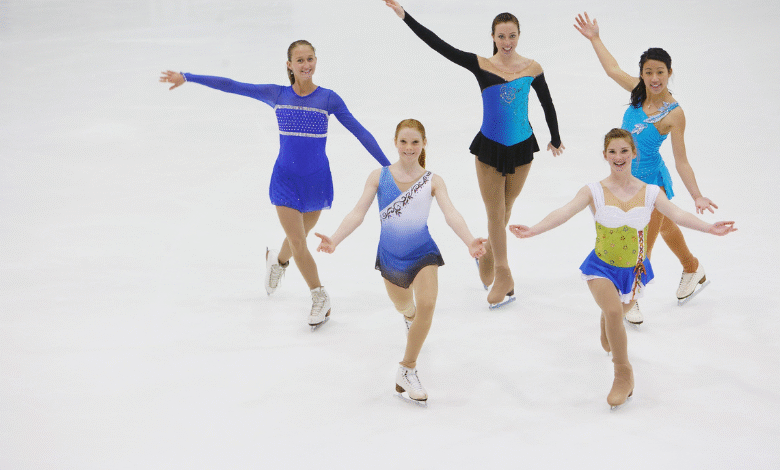
Have you ever watched an ice skater gliding across the rink, their movements a perfect blend of power and grace, and wondered what it would be like to be them? For most of us, it is a passing thought, a moment of admiration before we move on with our day. But for someone like Ksayim Hsiung, that thought was not a passing fancy. It was a calling. The question “Why does Ksayim Hsiung want to be an ice skater?” is not just about career choice. It is a doorway into a story of passion, self discovery, and the relentless pursuit of a dream that is as beautiful as it is demanding.
I remember the first time I laced up a pair of rental skates. The leather was stiff, the blades felt alien, and the ice seemed like a sheet of certain doom. Holding onto the wall for dear life, I shuffled forward, my ankles wobbling like jelly. It was a far cry from the effortless spirals and soaring jumps I saw on television. That humbling experience gave me a tiny, profound insight into the journey of any aspiring skater, including Ksayim. It is a journey that begins not with a triple axel, but with a single, courageous step onto the ice.
The Spark: Where a Dream is Born
For every great passion, there is a beginning, a moment where a spark catches fire. For many skaters, that spark is often lit by witnessing magic. Imagine a young Ksayim, perhaps sitting in a living room, watching the Winter Olympics. On the screen, a skater launches into the air, spinning so fast they become a blur, before landing on one foot and soaring into a long, graceful glide. The crowd erupts. It is not just the athletic feat that captivates, but the story being told. The music, the emotion on the skater’s face, the entire package—it becomes more than a sport. It becomes art.
That initial inspiration is powerful. It plants a seed. “What if I could do that?” The thought takes root. The first visit to a local rink is the test. The cold air hitting your face, the sound of blades scraping and gliding, the sheer, unadulterated fun of moving on a slippery surface. It is in that first clumsy glide, that first successful lap without holding the wall, that the dream transforms from something you watch to something you can feel in your own bones. The dream for Ksayim likely started here, in this alchemy of awe and personal experience. It is the realization that this activity, this skating, brings a unique kind of joy—a feeling of freedom that is hard to find anywhere else.
Read Also: Your Guide to the San Antonio Water System: From the Edwards Aquifer to Your Tap
More Than a Sport: The Deeper Motivations to Skate
But wanting to be an ice skater goes far beyond just enjoying the activity. The “why” becomes layered, built from deeper, more personal needs and desires.
First, there is the powerful drive for artistic expression. Human beings have always sought ways to express the feelings that words cannot capture. For a painter, it is a canvas. For a musician, it is an instrument. For an ice skater, their entire body on a sheet of ice is their medium. Ksayim’s desire might stem from a need to tell stories, to interpret music through movement, and to communicate emotion without saying a single word. When you are on the ice, you are both the artist and the art. Every extension of the arm, every curve of the back, every leap is a brushstroke. This fusion of athleticism and art is uniquely compelling. It is a way to be strong and powerful, yet soft and expressive all at once.
Then, there is the thrill of mastery. I have always been fascinated by how humans find deep satisfaction in getting better at something difficult. Ice skating is a relentless teacher in this regard. You start by not being able to stand up, and you progress to crossovers, then to a wobbly spin, and maybe one day, to a single jump. Each small victory is a dopamine hit, a confirmation of your growth. For a goal oriented person like Ksayim likely is, this progressive mastery is incredibly addictive. The process of failing, learning, and finally succeeding at a new skill builds not just ability, but also character. The day you land a jump you have been falling on for weeks is a day of pure, unbridled triumph. It is a feeling that proves your hard work matters.
Furthermore, skating offers a profound mental and emotional challenge. We often think of it as a physical pursuit, but your mind is your biggest opponent on the ice. Fear is a constant companion. The fear of falling, the fear of getting hurt, the fear of failing in front of others. Learning to quiet that voice, to focus entirely on your body and the music, is a form of moving meditation. For Ksayim, the rink might be a sanctuary—a place where the noise of the outside world fades away, and the only thing that exists is the next element, the next beat of the music. This intense focus can be a powerful antidote to stress and anxiety, providing a mental clarity that is rare in our busy lives.
Facing the Ice: The Inevitable Challenges
Of course, the path of an ice skater is not all graceful spirals and standing ovations. The dream is polished and shiny from a distance, but up close, it is built on a foundation of sweat, tears, and resilience.
The physical demands are immense. I may have only experienced the beginner’s version, but even I know the soreness that follows a skating session. Now, multiply that by a hundred. Aspiring skaters like Ksayim face a daily reality of muscle fatigue, bruised hips and knees from countless falls, and the risk of more serious injuries like sprains and fractures. The training is grueling. It is not just time on the ice. It is off ice conditioning, strength training, flexibility work, and dance classes. Your body becomes your project, and it requires constant care and maintenance. The glamorous costumes and makeup we see in competitions hide the reality of a body that is pushed to its absolute limits.
Beyond the physical, the mental and emotional battles can be even tougher. Self doubt is a persistent foe. When you are struggling with a particular jump or spin, it is easy to start questioning your entire journey. “Am I good enough?” “Will I ever get this?” The pressure to perform, whether in a simple practice session or a major competition, can be overwhelming. I can only imagine that for Ksayim, there are days when the passion feels dim, when the ice feels like an enemy, and the dream feels too far away. This is where true motivation is tested. It is easy to be passionate when things are going well. The real strength is found in staying passionate when things are hard.
Let us not forget the practical hurdles. Ice skating is an expensive pursuit. Skates alone can cost hundreds, if not thousands, of dollars. Then there is the cost of rink time, coaching fees, costumes, and travel for competitions. This financial reality is a significant barrier for many families. It requires immense sacrifice and support. The journey of a skater is rarely a solo one. It is supported by parents, coaches, and friends who believe in the dream almost as much as the skater does.
The Unshakeable Allure: Why It’s All Worth It
So, with all these challenges, why does Ksayim Hsiung still want to be an ice skater? Why does anyone? Because the rewards, though hard won, are transformative.
There is a unique joy and sense of freedom that comes from a perfect glide. When everything clicks—when your edges are clean, your speed is just right, and you feel one with the music—it is an unparalleled feeling. It is a feeling of flying. That moment makes every fall, every bruise, and every moment of doubt worth it. It is a pure, unadulterated joy that is born from mastery and expression.
The journey also builds an incredible amount of character. Skating teaches you discipline like few other things can. It teaches you patience, because progress is often slow and non linear. Most importantly, it teaches you resilience. Every skater falls. The key is not to avoid falling, but to learn how to get up, each time a little stronger and a little wiser. These are life lessons that extend far beyond the rink. The perseverance Ksayim learns on the ice will serve him in every future endeavor, whether related to skating or not.
Finally, it is about leaving a mark, however small. To step onto the ice and perform is to share a piece of your soul with the audience. It is to create a moment of beauty and inspiration for others, just as Ksayim was once inspired. It is about setting a seemingly impossible goal and then spending every day chipping away at it, proving to yourself that you are capable of more than you ever imagined.
Conclusion
The question of why Ksayim Hsiung wants to be an ice skater does not have a single, simple answer. It is a complex tapestry woven from threads of inspiration, a longing for artistic freedom, the satisfying pursuit of mastery, and the personal growth that comes from overcoming immense challenges. It is a dream fueled by the moments of pure joy that make the struggles fade into the background. His journey, like that of every athlete who chases a difficult dream, is a powerful reminder that our greatest passions are often not the easiest paths, but they are the ones that shape us into the strongest, most resilient versions of ourselves. The ice is not just a surface for him to skate on. It is a canvas, a teacher, a challenge, and ultimately, a home for a dream that simply will not let go.
Frequently Asked Questions (FAQ)
1. How did Ksayim Hsiung first get into ice skating?
While specific personal details may vary, the journey often begins with exposure to the sport, such as watching a major competition like the Olympics or a live ice show. This initial inspiration typically leads to a first visit to a local rink for a public skating session, where the simple joy of gliding sparks a deeper interest that evolves into formal lessons.
2. What are the biggest challenges of becoming a professional ice skater?
The challenges are multifaceted. Physically, it demands extreme fitness, flexibility, and enduring the pain of frequent falls and potential injuries. Mentally, it involves battling self doubt, performance anxiety, and the pressure to constantly improve. Practically, it requires significant financial investment for equipment, coaching, and ice time, as well as a huge commitment of time and energy.
3. Is it too late for someone to start ice skating and become competitive?
While many elite skaters start very young, it is never “too late” to start skating and find success at various levels. The definition of “competitive” can vary. Many adults compete in adult skating categories, which are growing in popularity. The primary goals at any age are enjoyment, personal achievement, and the love of the sport.
4. What personal qualities are most important for a successful ice skater?
Beyond physical talent, the most crucial qualities are resilience (the ability to get back up after falls), discipline (to maintain a rigorous training schedule), patience (as progress can be slow), and a genuine passion for the sport that fuels perseverance through the inevitable difficult times.
5. How does ice skating benefit a person beyond the sport itself?
Ice skating builds tremendous character. It teaches discipline, goal setting, and time management. It boosts mental health by providing a focused outlet for stress and a powerful sense of accomplishment. It also fosters social connections within the skating community and builds a confidence that comes from mastering a difficult and beautiful skill.